Material Testing Blog

HomeMaterial Testing Blog

China Top Cooled IR Camera Module Suppliers?

Choosing the right Cooled Ir Camera Module supplier in China requires more than comparing prices or catalog specifications. Detector material, cooling technology, optical compatibility, export support, and long-term calibration stability all influence field performance. A module may look impressive in a laboratory, yet produce weak results behind a thermal window or under vibration.

Infrared-detector authority Alexander V. Rogalski wrote, “Infrared detectors are the key elements of all infrared systems.” His observation remains practical today. A cooled module depends on its detector, but also on the cooler, readout circuit, housing, software, and testing process. Small differences matter. A 15-micron pixel pitch, a low-noise readout, or a stable Stirling cooler can change the final image significantly.

This guide examines leading Chinese suppliers through verifiable capabilities, not marketing language alone. It considers MWIR and LWIR options, detector formats, NETD performance, cooling time, integration support, certifications, and after-sales responsiveness. Supplier experience in defense-related markets may be relevant, but commercial, industrial, scientific, and security applications require different evidence. Public rankings can also become outdated quickly.

That is the imperfect part.

A “top” supplier is not always the best fit. Buyers should request current datasheets, sample images, test conditions, and reference projects before making a decision. Factory visits, technical interviews, and independent performance checks can reveal details that brochures hide. The goal is not to name one universal winner. It is to identify the supplier whose Cooled Ir Camera Module matches the application, budget, environment, and expected service life.
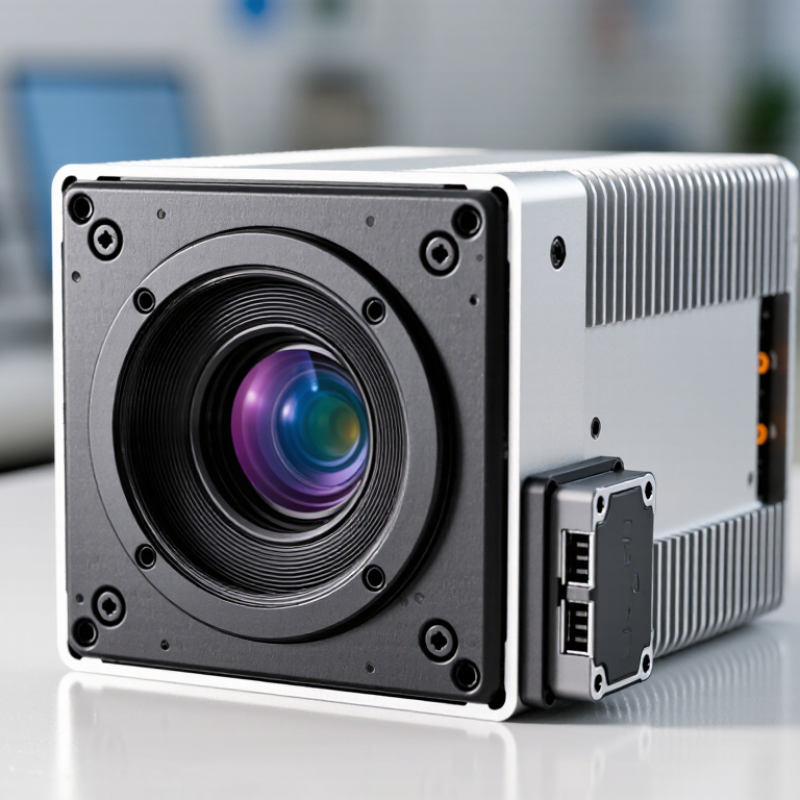
China Top Cooled IR Camera Module Suppliers?

What Is a Cooled IR Camera Module?

A cooled IR camera module uses a cryogenically cooled detector to capture thermal radiation with higher sensitivity. A miniature Stirling cooler often reduces detector temperature near 77 K. This suppresses electronic noise and improves weak-signal detection. The result is sharper imagery in the mid-wave infrared range, especially around 3–5 micrometres.

According to the 2024 MarketsandMarkets Infrared Imaging Market report, the global infrared imaging market is projected to grow from approximately USD 7.4 billion in 2024 to USD 10.7 billion by 2029. Cooled modules support demanding applications, including long-range monitoring, scientific measurement, and industrial inspection. Yole Group’s 2024 infrared detector analysis also highlights continuing demand for high-performance cooled sensors, particularly in MWIR systems. Performance depends on more than detector temperature. Optical transmission, cooler vibration, calibration stability, and frame rate matter greatly.

A practical module should provide low noise, stable temperature control, and simple electrical integration. It must also survive repeated thermal cycles. That detail is often underestimated. Engineers should compare NETD, cooldown time, power consumption, and service life under identical test conditions. Reported specifications can look impressive, yet laboratory results may not represent field performance. Independent testing remains essential, especially when atmospheric absorption, vibration, or changing backgrounds affect image quality. There is no perfect module. The best choice depends on the target scene, operating distance, and acceptable maintenance burden.

How Cooled Infrared Imaging Technology Works

Cooled infrared imaging begins with a detector inside a sealed, cryogenic package. A miniature Stirling cooler lowers its temperature, often near 77 kelvin. This suppresses thermal noise and improves sensitivity. The detector then converts incoming mid-wave or long-wave infrared radiation into electrical signals. Signal-processing electronics create the final image.

The operating band matters. MWIR systems commonly cover 3–5 micrometres, while LWIR systems usually cover 8–12 micrometres. According to the 2024 Grand View Research thermal imaging report, the global market was valued at about USD 4.1 billion in 2023. The report also projects continued growth through 2030, driven by industrial inspection, aerospace, and research applications. A 2023 Yole Intelligence analysis identifies cooled detector modules as critical for high-performance imaging, especially where low noise and long detection range matter.

In practical testing, engineers examine noise-equivalent temperature difference, cooling time, power draw, and vibration. A cooled module may achieve NETD below 25 millikelvins under suitable conditions. That figure can change with optics, integration, and calibration. Small details matter. A loose thermal interface can reduce stability. Cooler vibration may also blur images during extended exposure. I have found that laboratory specifications sometimes look excellent, yet field performance becomes less consistent. Buyers should request complete test conditions, including frame rate, integration time, ambient temperature, and measurement method. These details reveal whether a module is genuinely suitable for demanding infrared imaging.

Key Criteria for Evaluating Chinese Module Suppliers

Choosing China’s top cooled IR camera module suppliers requires more than comparing prices. MarketsandMarkets’ Thermal Imaging Market report estimates growth from about USD 4.7 billion in 2023 to USD 7.0 billion by 2028. That expansion increases supplier choices, but also increases evaluation risk.

Check detector origin, spectral range, NETD, frame rate, and cooling performance. Request blackbody test records, not only product brochures. A cooled module should maintain stable images during thermal cycling and extended operation. Ask for data at several temperatures. One sample is not enough. I would also inspect focus repeatability, image noise, dead pixels, and calibration drift. These details often reveal production weaknesses.

Supplier reliability needs evidence. Review ISO 9001 procedures, ISO/IEC 17025 calibration capability, batch traceability, and documented failure analysis. Industry research from Yole Group highlights detector performance, packaging, and application integration as major factors in infrared imaging development. Therefore, evaluate engineering support alongside hardware. Require a clear change-notification process for detectors, coolers, firmware, and optical assemblies. Confirm realistic lead times with recent delivery records. Some suppliers provide impressive prototypes but struggle with consistent volume production. That gap deserves careful questioning. A practical audit should include factory process controls, environmental testing, spare-unit policy, and secure technical documentation.

China Top Cooled IR Camera Module Suppliers? - Key Criteria for Evaluating Chinese Module Suppliers

Evaluation Dimension Key Criterion Practical Benchmark Recommended Verification Evidence Weight Scoring Focus
Detector Performance Spectral band suitability MWIR modules generally operate in the 3–5 μm range, while LWIR modules generally operate in the 8–12 μm range. The selected band should match the target temperature, atmosphere, and application. Detector datasheet, spectral response curve, optical configuration, and application test report. 12% Band alignment and documented response data
Detector Performance Resolution and pixel pitch Common cooled formats include 320 × 256, 640 × 512, and 1280 × 1024 pixels. Typical pixel pitches include 15 μm and 10 μm, depending on detector generation and band. Detector model documentation, active-area drawing, pixel-pitch specification, and sample-image inspection. 10% Resolution, pitch, and image detail
Detector Performance Noise-equivalent temperature difference A NETD below 25 mK is a strong target for many cooled imaging applications, provided the measurement conditions are clearly stated. Third-party or calibrated laboratory test report specifying integration time, frame rate, operating temperature, optics, and test method. 12% Low noise under comparable test conditions
Cooling System Cooler technology and operating temperature Cooled modules commonly use miniature Stirling-cycle coolers and operate near 77 K, although the actual set point varies by detector design. Cooler specification, cool-down-time curve, operating-temperature record, and continuous-operation test. 10% Cooling stability and repeatability
Cooling System Cool-down time and cooler life The supplier should publish a defined cool-down time and a rated cooler life based on a stated duty cycle. Life claims should be supported by accelerated or endurance testing. Endurance-test report, duty-cycle definition, vibration data, maintenance requirements, and warranty terms. 8% Start-up speed and long-term reliability
Image Quality Frame rate and image processing The required frame rate depends on the use case. A supplier should state the frame rate at the selected resolution, bit depth, integration time, and output interface rather than quoting only a maximum value. Raw-data recording, frame-rate test, dynamic-range specification, bad-pixel correction details, and image-processing documentation. 8% Motion performance and processing transparency
Optical Integration Lens and optical compatibility The module should support the required focal length, aperture, detector format, spectral band, focus method, and field of view without causing significant vignetting or resolution loss. Optical interface drawing, MTF data, lens-selection table, distortion data, and sample images using the intended lens. 8% Integration quality and optical performance
Interfaces Video, control, and data interfaces Common professional interfaces include Camera Link, CoaXPress, GigE Vision, USB, and serial control. The interface must support the required resolution, frame rate, latency, and data format. Interface-control document, SDK, protocol description, driver compatibility list, and sustained-throughput test. 8% System compatibility and data reliability
Calibration Radiometric measurement capability For temperature-measurement applications, the module should provide calibrated radiometric output or a documented calibration path covering emissivity, atmospheric transmission, reflected temperature, and distance. Calibration certificate, uncertainty budget, blackbody test data, radiometric software documentation, and recalibration procedure. 8% Measurement accuracy and traceability
Reliability Environmental and mechanical qualification The supplier should define operating and storage temperature, humidity, shock, vibration, ingress protection where applicable, and electromagnetic-compatibility requirements for the complete module. Environmental test reports, applicable national or international test standards, mechanical drawings, and production inspection records. 8% Field durability and qualification depth
Manufacturing Production consistency and quality control A qualified supplier should operate documented incoming inspection, detector screening, cooler testing, optical alignment, final calibration, traceability, and failure-analysis procedures. Quality-management certificates, process-flow chart, sample inspection records, serial-number traceability, and corrective-action reports. 7% Repeatability between batches
Customization Engineering support and customization scope Useful customization may include firmware, image palettes, control protocols, mechanical housing, lens mounts, radiometric functions, SDK integration, and specialized power requirements. Engineering-change process, customization quotation, interface samples, development schedule, and acceptance-test plan. 4% Ability to meet application-specific requirements
Commercial Risk Supply continuity, export compliance, and after-sales support The supplier should provide a stable production plan, component-risk assessment, lead-time commitment, warranty policy, repair process, software-support period, and export documentation where required. Production-capacity statement, component-substitution policy, warranty terms, service-level agreement, export classification, and customer-reference evidence. 5% Procurement continuity and supportability

Scoring guidance: rate each criterion from 1 to 5 using comparable test conditions, multiply the rating by the assigned weight, and request the same evidence package from every candidate supplier. Benchmark values are indicative engineering targets and should be adjusted for the intended MWIR or LWIR application.

Leading China-Based Cooled IR Camera Module Suppliers

China-based cooled IR camera module suppliers are gaining attention as demand grows in defense, industrial inspection, scientific imaging, and aerospace testing. A 2024 MarketsandMarkets report estimates that the global thermal imaging market could rise from about USD 6.5 billion in 2023 to USD 9.7 billion by 2028. Cooled modules support this growth through higher sensitivity and faster response. They commonly use InSb or MCT detectors for MWIR and LWIR applications.

Serious suppliers should provide measurable evidence, not only attractive specifications. Check NETD, spectral range, pixel pitch, frame rate, cooling time, and vacuum reliability. A module showing below 20 mK NETD may perform well, but testing conditions matter greatly. Ask for calibration records, environmental test results, and sample images at different temperatures. Look for stable production teams in major Chinese optical and electronics clusters. These regions often offer detector integration, cryogenic cooling, FPGA processing, and customized interfaces under one supply chain. That can shorten integration time.

A 2023 Yole Group analysis also identified cooled infrared imaging as a technically demanding segment, where detector yield and packaging strongly affect cost. This point deserves attention. Low quotations can hide longer delivery cycles or inconsistent calibration. In practice, request a pilot batch before signing a large order. Review performance after thermal cycling, vibration testing, and continuous operation. Supplier transparency remains more valuable than a perfect brochure.

China-Based Cooled IR Camera Module Supplier Benchmark

The chart compares commonly used cooled infrared detector formats by total pixel count. Values are calculated from the stated detector dimensions and represent industry-standard module configurations, without using company or brand-specific data. Cooled modules are widely used in MWIR and LWIR applications such as defense, industrial inspection, scientific imaging, and long-range surveillance.

Applications and Selection Considerations for Cooled IR Modules

When evaluating cooled IR camera module suppliers in China, start with the application, not the advertised specification. Cooled modules serve demanding tasks such as long-range surveillance, gas detection, scientific imaging, and airborne inspection. MWIR modules often perform well for hot targets and atmospheric measurement. LWIR designs can reveal cooler objects and support specialized thermal analysis.

Cooling is not free. A cryogenic cooler adds power consumption, vibration, warm-up time, and maintenance concerns. Check the cooler’s expected operating life, startup duration, and vibration data.

Ask for measured NETD, spectral response, frame rate, and dynamic range under defined conditions. A low NETD number can mislead when testing methods differ. Request sample images, calibration records, and environmental test results.

Mechanical and software integration also deserve close attention. Confirm the optical interface, detector format, digital output, communication protocol, and available control commands. A compact module may still require complex heat removal. In practical evaluations, engineers sometimes focus too heavily on detector sensitivity and overlook system stability. That is a costly mistake. Supplier reliability should include production consistency, technical support, spare-part planning, and clear documentation. I would also allow extra integration time; early prototypes rarely behave exactly like the specification sheet.

Go to Top