Material Testing Blog

HomeMaterial Testing Blog

10 Best Grounding Transformer Suppliers for Global Buyers

Reliable grounding is becoming more important as grids add renewable generation, data centers, and industrial loads. The International Energy Agency reported in Electricity 2024 that global electricity demand may grow by more than 2.5% annually through 2026. More equipment means more complex fault paths. It also means less tolerance for weak protection design.

A Grounding Transformer creates a neutral point where a three-phase system may not otherwise have one. It can limit ground-fault current, stabilize phase-to-ground voltage, and support safer relay operation. J. C. Das, a respected power-system author and engineer, describes the practical purpose clearly: “A grounding transformer provides a neutral point for system grounding.” The wording is simple. The engineering is not.

MarketsandMarkets projects the global transformer market to grow from about USD 58 billion in 2024 to more than USD 76 billion by 2029. That broader market includes grounding, distribution, and power transformers. IEC 60076-6 also provides relevant guidance for reactors and special transformer applications. These references help buyers compare suppliers beyond attractive brochures.

This guide reviews 10 Best Grounding Transformer Suppliers for Global Buyers. It considers fault-current performance, insulation quality, enclosure design, testing, delivery capability, and after-sales support. Factory acceptance testing matters. So do local commissioning skills.

No ranking is perfect. A supplier may perform well in one climate and struggle in another. Buyers should verify temperature rise, zero-sequence impedance, short-time ratings, earthing methods, and applicable certifications. A clear technical schedule is often more valuable than a polished sales presentation. The right choice protects equipment, workers, and long-term grid reliability.
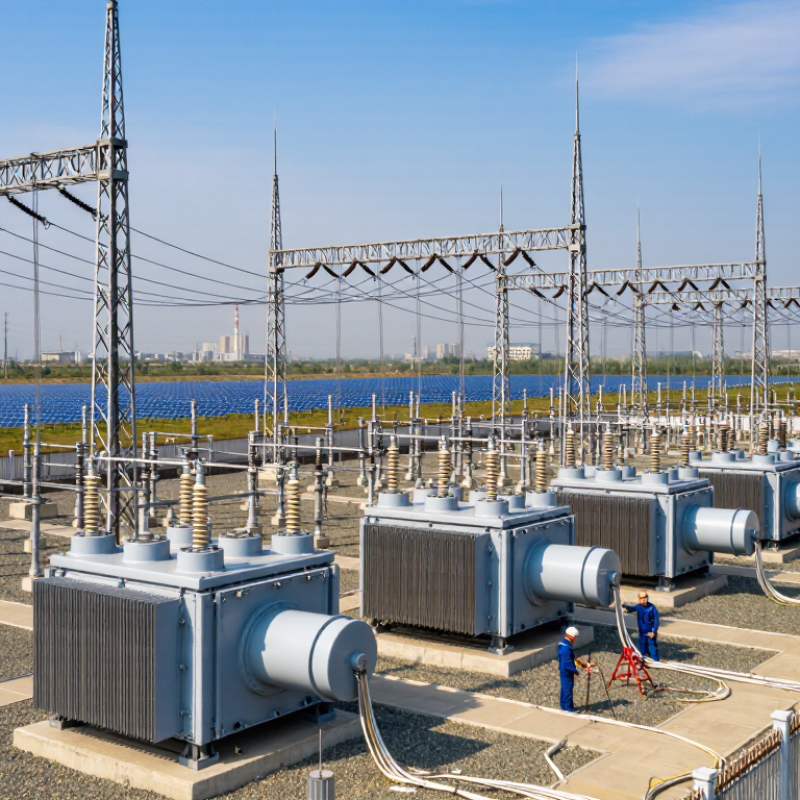
10 Best Grounding Transformer Suppliers for Global Buyers

What Is a Grounding Transformer and Why Is It Used?

What Is a Grounding Transformer and Why Is It Used?

A grounding transformer creates a neutral point for electrical systems without a naturally available neutral conductor. It commonly uses a zigzag or delta-wye winding arrangement. This connection gives fault current a controlled path toward ground during a line-to-ground fault.

The transformer does not normally supply large continuous loads. Its main role is system protection. When a fault occurs, the grounding path allows protective relays to detect abnormal current and isolate the affected circuit. Engineers may add a neutral grounding resistor to limit fault current and reduce equipment damage. Without adequate grounding, fault voltage can rise unexpectedly across insulation and connected equipment.

Practical selection requires more than checking voltage and power ratings. Designers examine system voltage, fault duration, grounding method, insulation level, and local operating conditions. A commissioning team should verify winding connections, resistance values, relay signals, and physical clearances. Small wiring errors can weaken the entire protection scheme. They happen more often than expected.

In field work, temperature, dust, moisture, and repeated fault events also deserve attention. A transformer sized only from normal load data may perform poorly during an actual fault. No design is perfect. Reviewing fault studies and maintenance records can reveal assumptions that need correction. Reliable suppliers should provide test reports, clear drawings, traceable materials, and practical technical support.

This illustrative engineering example shows the neutral grounding current produced by different neutral grounding resistor values on a 13.8 kV system. The current is calculated using the phase-to-neutral voltage of approximately 7.97 kV and Ohm’s law: I = V/R. Grounding transformers provide a neutral point for connecting the resistor, limiting earth-fault current while maintaining a controlled grounding path. Final ratings must be selected through a system study.

Key Criteria for Evaluating Global Grounding Transformer Suppliers

Choosing among the 10 best grounding transformer suppliers requires more than comparing prices. Global buyers should examine design competence, manufacturing controls, and after-sales evidence. Request load calculations, impedance data, insulation levels, thermal limits, and short-circuit withstand results. These documents should match the proposed voltage, frequency, earthing arrangement, and installation altitude. Ask whether engineers can explain the neutral point behavior during a fault. Clear answers reveal practical expertise. Vague promises do not.

Supplier evaluation should also cover independent testing and traceability. Check routine and type-test reports, calibration records, material certificates, and serial-number tracking. Confirm that testing follows relevant international standards and that local grid requirements are understood. A supplier may offer a technically correct transformer, yet fail on delivery packaging, spare parts, or commissioning support. Inspect the factory remotely or in person when project value justifies it. Look for controlled winding processes, dry storage, torque records, and final inspection photos. Ask for references from installations with similar ratings and climates. Details matter.

Commercial terms deserve equal attention. Compare warranty scope, response times, documentation language, payment safeguards, and replacement procedures. Do not rely only on a polished datasheet. That assumption can fail. I would also score communication during technical clarification, because delays often begin before production. A dependable supplier admits design limits and records agreed deviations. Perfect claims deserve caution. Independent verification, realistic schedules, and measurable acceptance criteria provide stronger protection for buyers.

Profiles of the 10 Best Grounding Transformer Suppliers

The first supplier specializes in dry-type grounding transformers for commercial buildings and compact substations. Its engineers provide thermal calculations, neutral grounding options, and installation drawings. The second focuses on oil-immersed units for utility networks, with documented insulation testing and factory inspection records. Field technicians report practical lessons from humid and dusty sites. The third supplies high-resistance grounding transformers, helping limit fault current without abandoning system continuity. Its application guides explain resistor sizing clearly. Still, buyers should verify local protection settings.

The fourth supplier serves renewable energy projects with grounding transformers designed for fluctuating loads and outdoor exposure. The fifth offers custom zigzag transformers for industrial plants, including arc-flash coordination support. The sixth maintains a broad catalog of low-voltage and medium-voltage models, with faster standard delivery. That speed can reduce project delays. However, stock availability needs written confirmation. The seventh supplier builds units for rail and transportation systems, emphasizing vibration control, enclosure strength, and routine maintenance access.

The eighth supplier provides compact transformers for data centers, where grounding reliability and low acoustic noise matter. The ninth supports mining and heavy manufacturing sites with reinforced enclosures and extended temperature options. Its engineers usually request load profiles before quoting. The tenth supplier concentrates on export projects, offering multilingual documents, test certificates, and packing suitable for long-distance transport.

Across these profiles, reliable suppliers should explain impedance, insulation class, neutral connection, losses, and warranty limits. Some quotations appear complete but omit short-circuit withstand data. That omission deserves careful review. Experiences differ. A site visit or independent inspection may reveal details that brochures cannot.

Comparison of Supplier Products, Certifications, and Global Coverage

When comparing the 10 best grounding transformer suppliers, buyers should examine product depth, not catalogue size. Strong suppliers offer zigzag, wye-delta, and grounding transformers for substations, renewable plants, and industrial networks. They should provide rated voltage, neutral current, short-time withstand, insulation level, and cooling details. Factory inspection records matter too. Ask for routine and type-test reports before approving a purchase.

Certifications reveal process discipline, but they never replace engineering judgment. Look for ISO 9001 quality systems, ISO 14001 environmental controls, and testing aligned with IEC 60076 or applicable local standards. Some suppliers also hold regional approvals for North America, Europe, or the Middle East. Verify certificate scope and expiry dates. A logo alone proves little.

Global coverage includes more than export experience. Review production locations, spare-part access, packaging methods, and technical support across time zones. Suppliers with regional service teams can reduce commissioning delays when a neutral connection behaves unexpectedly. Check whether drawings, protection settings, and manuals arrive in your required language. Response time should be measured, not assumed.

The comparison is not perfect. Public data can hide subcontracted testing or changing lead times. I would request recent references from projects with similar fault levels and climate conditions. Desert heat, coastal salt, and high-altitude cooling can change transformer selection. A lower quotation may exclude site testing, duties, or replacement components. Read the exclusions carefully. That small line can become expensive.

10 Best Grounding Transformer Suppliers for Global Buyers - Comparison of Supplier Products, Certifications, and Global Coverage

An anonymized comparison of supplier profiles for grounding transformers, zig-zag transformers, grounding resistor packages, and related medium-voltage grid applications.

Rank Supplier Profile Primary Product Offering Typical Voltage Range Typical Capacity / Neutral Rating Applicable Technical Standards Certification Evidence to Request Testing Capability Global Coverage Best-Fit Buyer Requirement
1 Supplier Profile A Zig-zag grounding transformers
Grounding transformer plus neutral grounding resistor packages
3.3 kV 6.6 kV 11 kV 13.8 kV Distribution and industrial neutral grounding applications;
resistor time ratings commonly specified at 10 s or 30 s
IEC 60076-1
IEC 60076-6
IEEE C57.12.01
IEEE 32 for grounding equipment where applicable
ISO 9001 quality management system
ISO 14001 environmental management system
ISO 45001 occupational health and safety system
Routine dielectric, ratio, winding-resistance, insulation-resistance, and no-load-loss tests;
special tests subject to quotation
Asia, Middle East, Africa, and selected European markets Industrial plants, utility substations, renewable-energy collector systems, and mining networks
2 Supplier Profile B Dry-type grounding transformers
Indoor neutral grounding units for switchgear lineups
400 V 3.3 kV 6.6 kV 11 kV Low- and medium-power grounding duties;
resistor coordination based on earth-fault current and clearing time
IEC 60076-11 for dry-type transformers
IEC 60076-1
IEC 60076-6
IEC 60529 for enclosure protection where applicable
ISO 9001 certificate
Factory acceptance test records
Type-test reports for the proposed design
Temperature-rise, partial-discharge, induced-voltage, applied-voltage, and impulse tests when specified Europe, North America, Asia-Pacific, and export EPC channels Indoor substations, data centers, commercial facilities, and compact electrical rooms
3 Supplier Profile C Oil-immersed grounding transformers
Outdoor substation grounding transformer assemblies
6.6 kV 11 kV 22 kV 33 kV Medium-voltage substation applications;
neutral-current and short-time thermal-duty design available by project specification
IEC 60076-1
IEC 60076-2
IEC 60076-3
IEC 60076-6
ISO 9001 quality certification
ISO 14001 environmental certification
Oil-processing and sealing-system inspection records
Routine factory tests plus oil dielectric-strength, leak, pressure, and temperature-rise checks as applicable Asia, Latin America, Africa, and utility-led international projects Outdoor utility substations, transmission auxiliaries, and high-load industrial networks
4 Supplier Profile D Grounding transformers for renewable-energy systems
Collector-grid zig-zag transformers and resistor skids
6.6 kV 11 kV 20 kV 33 kV Wind and solar collector networks;
neutral grounding packages coordinated with inverter fault-current limits
IEC 60076-1
IEC 60076-6
IEC 61439 for low-voltage assemblies where applicable
Project-specific grid-code requirements
ISO 9001
FAT procedure approval
Grid-connection and protection-coordination documentation
Routine transformer tests, resistor resistance checks, enclosure inspection, and functional FAT Europe, Australia, North America, Middle East, and Asia-Pacific Solar farms, wind farms, battery-storage plants, and hybrid renewable-energy projects
5 Supplier Profile E High-resistance grounding transformer systems
Transformer, neutral resistor, CT, and monitoring panel packages
4.16 kV 6.6 kV 11 kV 15 kV Low earth-fault-current systems;
continuous or short-time neutral grounding service according to protection philosophy
IEEE 32
IEEE C57.12.01
IEC 60076-1
IEC 60076-6
ISO 9001
Protection-relay and control-panel documentation
Material traceability records
Resistor temperature-rise, resistance-value, insulation, transformer routine, and control-panel functional tests North America, South America, Australia, and selected industrial export markets Petrochemical facilities, process industries, pulp and paper plants, and large manufacturing sites
6 Supplier Profile F Compact grounding transformer modules
Packaged medium-voltage substation solutions
3.3 kV 6.6 kV 11 kV 22 kV Compact skid-mounted or containerized applications;
neutral grounding resistor integration available
IEC 60076-1
IEC 60076-6
IEC 62271 series for associated medium-voltage switchgear where applicable
ISO 9001
ISO 45001
Enclosure and switchgear compliance documents
Transformer routine tests, high-voltage tests, wiring checks, interlock tests, and package FAT Southeast Asia, Africa, Middle East, and international EPC projects Remote sites, temporary substations, infrastructure projects, and modular power systems
7 Supplier Profile G High-voltage grounding transformers
Neutral grounding systems for utility and heavy-industry networks
11 kV 22 kV 33 kV 66 kV Utility and large industrial substations;
system grounding design based on fault current, duration, and insulation coordination
IEC 60076-1
IEC 60076-3
IEC 60076-6
IEEE C57 series where specified by the purchaser
ISO 9001
ISO 14001
Accredited laboratory reports or witnessed type-test records
Routine tests, impulse testing when required, temperature-rise tests, and purchaser-witnessed FAT Europe, Central Asia, Middle East, and African utility markets Utility substations, rail electrification, mining, metals, and high-voltage industrial systems
8 Supplier Profile H Cast-resin zig-zag transformers
Fire-conscious indoor grounding transformer packages
400 V 3.3 kV 6.6 kV 11 kV Indoor commercial and industrial neutral grounding;
low-maintenance dry-type construction
IEC 60076-11
IEC 60076-1
IEC 60076-6
IEC 60068 environmental tests where specified
ISO 9001
Resin-system technical data
Fire-performance and environmental test documentation where required
Partial-discharge, insulation, temperature-rise, induced-voltage, and applied-voltage tests Europe, North America, East Asia, and selected Middle Eastern markets Hospitals, airports, data centers, high-rise buildings, and indoor substations
9 Supplier Profile I Custom grounding transformers for traction and transport systems
Special neutral grounding assemblies
3.3 kV 6.6 kV 11 kV 33 kV Railway auxiliary substations and transport infrastructure;
design adapted to harmonic, cyclic-load, and space constraints
IEC 60076-1
IEC 60076-6
IEC 61373 for railway equipment vibration where applicable
EN 50155 for associated electronic equipment where applicable
ISO 9001
Project quality plan
Railway-sector compliance and vibration-test evidence where required
Routine transformer tests, vibration-related inspection, thermal-cycle checks, and functional package FAT Europe, Asia-Pacific, the Middle East, and Latin American transport projects Railways, metro systems, depots, tunnels, and transportation electrification projects
10 Supplier Profile J Cost-optimized grounding transformer and resistor assemblies
Standardized export configurations
3.3 kV 6.6 kV 11 kV 22 kV Standard industrial and commercial applications;
short-time neutral grounding ratings commonly engineered to the buyer's fault-current study
IEC 60076-1
IEC 60076-6
IEC 60076-11 for dry-type designs
IEEE standards available by specification
ISO 9001
Factory test certificates
Certificate of conformity and material certificates on request
Routine electrical tests, dimensional inspection, resistor-value checks, and optional witnessed FAT Asia, Africa, South America, and price-sensitive international projects General industrial distribution, commercial facilities, water treatment, and OEM integration

Buyer verification note: Product ratings, certifications, type-test availability, delivery schedules, and export approvals vary by design and project. Request the latest ISO certificates, routine-test reports, type-test evidence, datasheets, drawings, warranty terms, and references for the exact proposed model before purchase.

Technical reference framework: IEC 60076 transformer standards, IEC 60076-6 reactor and grounding-related transformer applications, IEC 60076-11 dry-type transformers, IEEE C57 transformer standards, IEEE 32 grounding equipment requirements, and applicable project-specific grid, railway, enclosure, and switchgear standards.

How Global Buyers Can Select and Purchase the Right Supplier

10 Best Grounding Transformer Suppliers for Global Buyers

How Global Buyers Can Select and Purchase the Right Supplier

Global grid investment is becoming more demanding. The International Energy Agency reported that over 80 million kilometers of grids must be added or replaced by 2040. It also projects annual grid investment above USD 600 billion by 2030. For buyers, supplier selection should begin with the application, not the quotation. Define system voltage, grounding method, zero-sequence impedance, fault current, duty cycle, and installation altitude.

Request type-test and routine-test records aligned with IEC 60076 requirements. Ask for winding resistance, insulation, temperature-rise, induced-voltage, and short-circuit evidence. A reliable supplier should explain whether a zig-zag or wye-delta design suits the network.

Check neutral grounding resistor coordination, enclosure protection, cooling, noise, and harmonic conditions. Small omissions can become expensive site failures.

Compare total ownership cost, not only the unit price. Include engineering drawings, factory inspection, spare parts, packaging, insurance, delivery terms, commissioning, and response time. Ask for customer references with similar fault levels and climates. Verify quality certificates independently, where possible. Factory visits help, but they do not prove every process. I have seen polished documentation hide weak after-sales planning. That deserves reflection. Buyers should also confirm local service capability, warranty exclusions, maintenance intervals, and replacement lead times before signing a purchase contract.

Go to Top