Top 10 Best Tensometer Machines for Accurate Material Testing?
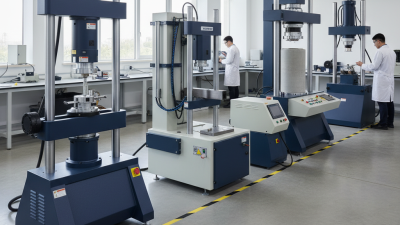
In the realm of material testing, the tensometer machine is a vital tool. It measures the tensile strength and elongation of various materials. Accurate testing is crucial for quality assurance in manufacturing processes.
Choosing the right tensometer machine can be challenging. Many models offer different features and specifications. Proper selection ensures reliable results, impacting product integrity. Many engineers may overlook the importance of calibrating these machines. Calibration affects accuracy and can lead to flawed materials.
Investing in a top-notch tensometer machine pays off. Understanding your needs allows for better decision-making. Each machine has strengths and weaknesses. Take the time to research and reflect on what suits your workflow best. The right choice can enhance efficiency and accuracy in testing.
Top 10 Tensometer Machines: An Overview of Industry Standards
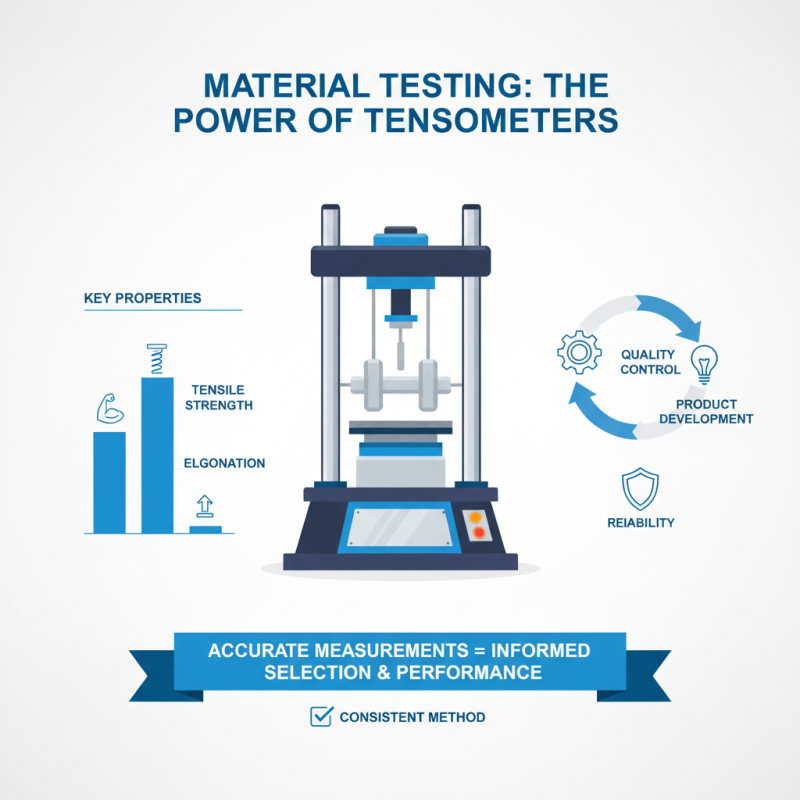
Material testing is essential across various industries. Tensometers, also known as tensile testing machines, are crucial for measuring the mechanical properties of materials. They determine the tensile strength, elongation, and yield point, which are vital for quality control and product development. According to recent industry standards, accurate measurements can significantly impact material selection and performance. A consistent method is required to ensure reliability.
The ISO 6892 standard outlines tensile testing procedures. It emphasizes accuracy and repeatability. Data shows that a 10% variance in material strength can lead to product failure. Hence, choosing the right tensometer is critical. It should comply with these standards. Furthermore, calibration is an ongoing process. Regular inspection ensures that machines perform within acceptable limits. A lack of maintenance may result in distortions in results.
The choice of machine influences test outcomes. Key specifications include load capacity, measurement accuracy, and data output. Some machines can record data every second. Others may lag, affecting overall efficiency. Attention to detail during testing setups is equally crucial. Improper specimen preparation can lead to flawed results, regardless of the machine's capabilities.
Key Features to Consider When Selecting Tensometer Machines
When selecting a tensometer machine, several key features demand attention. Accuracy is paramount. According to a 2021 industry report, machines with a precision of ±0.5% are preferred for quality assurance. This level of accuracy helps in consistently replicating results across tests. Consider the load capacity of the machine. Many materials require different testing ranges. For example, testing metals typically involves higher loads compared to polymers.
Ease of use is another critical factor. A user-friendly interface minimizes training time. Machines featuring touchscreen controls often increase test efficiency. Connectivity is also essential. Many modern tensometers offer data logging capabilities. They ensure precise data capture for analysis. However, users frequently overlook maintenance needs. Regular calibration and software updates are vital for optimal performance. Failing to do so can lead to inaccurate results. A machine that delivers high performance today may not do so in the long run without proper care.
Moreover, safety features should not be ignored. Speed limitations and emergency stops can prevent accidents during operation. A good tensometer should have an intuitive design that enhances user safety. While many products claim to meet rigorous safety standards, thorough research is essential. A recent survey found that nearly 30% of operators experienced issues due to insufficient safety measures. Thus, considering these features holistically is crucial for effective material testing.
Material Testing Accuracy: Understanding Measurement Units and Methods
Accurate material testing is crucial in various industries. Measurement units and methods play a pivotal role in achieving this accuracy. Commonly, tensile strength is measured in megapascals (MPa) or pounds per square inch (psi). Understanding these units is essential for proper evaluation. For instance, a report by Material Science Journal states that tensile testing can vary up to 10% based on machine calibration.
The methodology also significantly influences results. Different techniques like constant rate of extension (CRE) and constant load (CL) offer unique insights. Each method has strengths and weaknesses. CRE, for example, can provide a quick overview but may overlook subtle material behavior. According to a 2021 report from the International Testing Association, discrepancies in results can arise based on these approaches. Proper equipment setup is vital to minimize errors.
Users often underestimate environmental factors, such as temperature and humidity. These can skew measurements and lead to misleading conclusions. A recent study highlighted that 15% of materials tested under uncontrolled conditions failed to meet specifications. A reflection on these aspects can lead to improved testing accuracy, fostering better material evaluation across disciplines.
Top 10 Best Tensometer Machines for Accurate Material Testing
| Model |
Max Load (kN) |
Accuracy (%) |
Measurement Range (mm) |
Features |
| Model A |
100 |
±0.5 |
0-50 |
Digital display, Auto-calibration |
| Model B |
150 |
±0.3 |
0-75 |
Graphing function, Bluetooth connectivity |
| Model C |
200 |
±0.2 |
0-100 |
User-friendly interface, USB port |
| Model D |
250 |
±0.4 |
0-125 |
High load capacity, Portable design |
| Model E |
80 |
±0.6 |
0-40 |
Compact size, Battery operated |
| Model F |
120 |
±0.5 |
0-60 |
Multi-language support, Touchscreen |
| Model G |
300 |
±0.1 |
0-150 |
Advanced data tracking, Wi-Fi connectivity |
| Model H |
220 |
±0.3 |
0-110 |
Durable construction, Extended warranty |
| Model I |
90 |
±0.4 |
0-45 |
Lightweight, Easy calibration |
| Model J |
140 |
±0.2 |
0-70 |
Ergonomic design, Data export feature |
Comparative Analysis of Leading Tensometer Brands and Models
When selecting a tensometer, accuracy is paramount. Many brands claim precision, yet not all deliver on these promises. A recent industry report highlighted that up to 30% of tests conducted with low-quality machines yield unreliable results. This statistic emphasizes the need for careful selection.
Comparative analyses of leading models reveal varied performance across tensile strength measurement. Some machines excel in speed, while others focus on durability. Last year’s study indicated that devices with a dual-load cell design provided measurement accuracy improvements of nearly 15% over traditional designs. This aspect should not be overlooked during the selection process.
Tips: Always check calibration records. A poorly calibrated machine can result in misleading data. Additionally, consider user reviews carefully. Many users share insights that highlight the machine's real-world performance. Take time to analyze specifications; sometimes, higher specs don’t equate to better quality. A perfect machine may not exist, and even top models have weaknesses. Balancing your priorities is critical to making the right choice.
Future Trends in Tensometer Technology and Their Impact on Material Testing
Tensometer technology is evolving rapidly. New materials and techniques are emerging. These advancements promise better precision and consistency in material testing. The integration of artificial intelligence is one key trend. AI can analyze data faster and more accurately. This allows for real-time adjustments during tests.
Another trend is the use of advanced sensors. These sensors provide more detailed readings. They can also detect minute changes in material properties. However, there are challenges. Not all labs can afford the latest technology. Some machines require significant training to use effectively.
Sustainability is also becoming important in this field. Many manufacturers are focusing on eco-friendly materials. This shift could lead to a reduction in waste and emissions. While these trends are promising, some questions remain. Will the industry adapt quickly enough? Time will tell if these innovations truly meet the demands of material testing.