


2026 Top Industrial Rigging Types for Global Buyers
Industrial Rigging will remain central to safe lifting across construction, manufacturing, ports, energy, and warehouse operations in 2026. Global buyers are comparing wire rope slings, synthetic web slings, chain slings, shackles, lifting beams, and modular spreader systems. Each type behaves differently around sharp edges, heat, chemicals, abrasion, and changing load angles. The right choice is never based on price alone.
Recent market studies from MarketsandMarkets and Grand View Research identify construction, industrial production, logistics, and infrastructure as major demand sectors for lifting equipment. Their findings also point to stronger interest in engineered systems, traceability, and inspection-led procurement. The International Labour Organization continues to report serious workplace risks linked to unsafe lifting and material-handling practices. In the United States, OSHA 1910.184 and ASME B30 standards provide widely referenced guidance for sling use, inspection, and capacity control.
The details matter. A 3-meter polyester sling may protect a painted load better than a chain sling, but it can fail quickly against an unprotected corner. A wire rope sling may handle abrasion well, yet its bending radius and corrosion condition require close attention. Buyers should verify working load limits, safety factors, certificates, batch identification, and local compliance requirements before ordering.
A simple ranking can mislead. Market reports often measure revenue, not field performance. Real projects add weather, operator habits, storage conditions, and imperfect inspections. That assumption fails. This 2026 guide compares leading Industrial Rigging types through practical selection criteria, recognized standards, and supplier reliability, helping global buyers make safer, more defensible purchasing decisions.
Industrial Rigging: Definition, Purpose, and Core Components
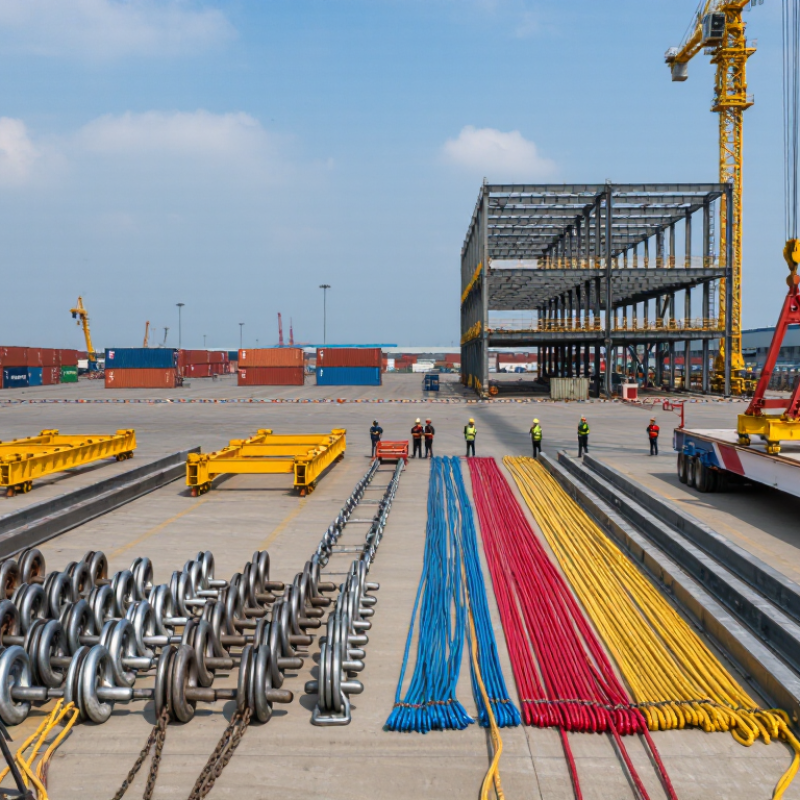
Industrial rigging is the planned connection between a load and lifting equipment. It includes slings, shackles, hooks, wire rope, chain, spreader beams, and lifting points. Its purpose is controlled movement, not merely greater strength. A 10-ton load can become unstable when its center of gravity shifts during acceleration, rotation, or landing. Small angles matter. At a 30-degree sling angle, each sling leg carries more tension than the load divided by two. That basic error still appears in jobsite calculations.
The core system has four checks: load weight, center of gravity, component capacity, and connection security. Synthetic slings suit many finished surfaces, while wire rope and chain tolerate different heat, abrasion, and cutting risks. Shackles need compatible pin sizes and loading directions. Hooks require proper seating, not side loading. OSHA’s rigging requirements call for inspections before use and removal of defective components. The International Labour Organization reported about 2.93 million work-related deaths globally in 2019, showing why lifting controls cannot be treated as paperwork.
For global buyers comparing 2026 rigging types, traceability should accompany capacity. Test certificates, marked working load limits, inspection records, and clear operating instructions support reliable purchasing. Product selection also depends on local temperature, corrosion, edge contact, and handling frequency. A catalogue rating is not a site assessment. It is only a starting point. In practice, teams sometimes choose oversized gear and still miss an unsafe angle. That is the uncomfortable lesson: stronger hardware does not correct weak planning.
| Rigging Type | Definition | Primary Purpose | Core Components | Typical Applications | Common Materials | Key Selection Criteria | Important Safety Considerations |
|---|---|---|---|---|---|---|---|
| Wire Rope Slings | Flexible lifting assemblies made from steel wire rope with formed end fittings. | To lift, support, and position heavy loads where high strength and abrasion resistance are required. | Wire rope Thimbles Sleeves Eyes | Steel fabrication, shipyards, construction, machinery handling, and energy projects. | Galvanized or bright steel wire rope; steel fittings. | Rated capacity, rope diameter, sling configuration, operating temperature, and resistance to abrasion or crushing. | Inspect for broken wires, corrosion, kinking, bird-caging, crushing, and damaged end fittings. Do not use a rope sling with severe distortion or excessive wear. |
| Synthetic Web Slings | Flat lifting slings woven from high-strength synthetic fibers, generally supplied as endless, eye-and-eye, or multi-leg assemblies. | To handle loads while reducing surface damage and improving flexibility around irregular shapes. | Woven webbing Reinforced eyes Protective sleeves | General material handling, painted equipment, glass, packaged goods, and indoor lifting operations. | Polyester or other engineered synthetic fibers; protective textile covers. | Working load limit, sling width, hitch type, load-edge condition, chemical exposure, and temperature. | Protect against sharp edges, heat, molten metal, ultraviolet exposure, and incompatible chemicals. Remove slings showing cuts, burns, melting, or damaged stitching. |
| Roundslings | Continuous-loop lifting slings consisting of load-bearing synthetic fibers enclosed in a protective outer jacket. | To provide a lightweight and adaptable connection for choker, vertical, and basket hitches. | Core yarn Outer jacket Identification label | Construction, plant maintenance, modular equipment installation, and general overhead lifting. | Polyester or other high-strength synthetic fibers; woven protective jacket. | Rated capacity by hitch, effective length, jacket condition, edge protection, and environmental compatibility. | Do not rely on the outer cover alone to determine condition. Inspect for exposed core fibers, cuts, abrasion, chemical damage, and heat damage. |
| Chain Slings | Load-lifting assemblies made from alloy-steel chain and fitted with connecting and end hardware. | To lift hot, sharp, abrasive, or heavy loads in demanding industrial environments. | Alloy chain Master link Hooks Shorteners | Foundries, steel plants, heavy machinery, shipbuilding, fabrication, and maintenance work. | Heat-treated alloy steel; corrosion-resistant finishes may be used for specific environments. | Chain grade, diameter, number of legs, hitch angle, temperature, hook type, and load geometry. | Check for stretched, bent, cracked, gouged, or excessively worn links and hooks. Ensure hooks are properly latched and the sling angle is considered in capacity calculations. |
| Shackles | Removable load-connection hardware consisting of a curved body and a pin. | To connect slings, lifting points, spreader beams, and other rigging components. | Shackle body Pin Shoulders Rated marking | Assembly of lifting systems, offshore handling, structural lifting, and connection of multi-leg slings. | Forged alloy steel; protective coatings vary by service environment. | Bow or dee configuration, working load limit, pin style, connection direction, load angle, and available clearance. | Load the shackle in line unless it is specifically rated for side loading. Never replace the pin with an unapproved substitute or exceed the marked working load limit. |
| Hooks | Load-engaging devices designed to connect lifting equipment or slings to a load. | To provide a quick and secure connection point for lifting and positioning operations. | Hook body Eye or clevis Latch Swivel | Cranes, hoists, chain slings, wire rope assemblies, and material-handling systems. | Forged alloy steel or other engineered load-bearing metals. | Hook type, throat opening, working load limit, latch design, swivel requirements, and load balance. | Apply the load in the bowl of the hook, not on the tip. Remove hooks with cracks, excessive throat opening, twisting, latch failure, or visible deformation. |
| Lifting Clamps | Mechanical devices that grip plate, beam, pipe, or other specific load shapes through a jaw or cam mechanism. | To lift or move materials without drilling, welding, or permanently attaching lifting points. | Body Jaw Cam Locking mechanism | Steel plate handling, fabrication shops, shipyards, construction, and structural installation. | Heat-treated steel bodies and hardened gripping components. | Material thickness, surface condition, clamp direction, jaw capacity, load hardness, and required safety factor. | Use only on compatible materials and within the stated orientation. Keep gripping surfaces clean and do not lift loads with loose, oily, painted, or damaged contact areas unless approved for that condition. |
| Spreader Beams | Structural lifting beams that distribute load forces and maintain separation between lifting points. | To reduce compressive forces on a load and control sling angles during lifting. | Beam Top connection Bottom lifting points End fittings | Long or flexible loads, containers, steel plates, precast components, and engineered heavy lifts. | Structural steel or engineered high-strength metal sections. | Rated capacity, beam span, lift-point spacing, self-weight, center of gravity, and connection configuration. | Confirm the beam is designed for the intended load arrangement. Inspect welds, pins, connection points, identification markings, and any signs of bending or deformation. |
| Lifting Beams | Structural beams designed to carry load primarily through bending and to connect directly to lifting points. | To provide controlled lifting for loads with fixed or closely spaced attachment points. | Beam structure Top lug Bottom lugs Pins | Industrial modules, machinery, tanks, transformers, and precision equipment installation. | Engineered structural steel or high-strength alloy steel. | Beam capacity, bending stresses, lifting-point arrangement, load center of gravity, and crane or hoist compatibility. | Use only within the engineered configuration and marked capacity. Verify that all attachment points share the intended load and that the beam is not side-loaded. |
| Turnbuckles and Tensioners | Adjustable mechanical devices used to apply or fine-tune tension in wire rope, cable, or tie systems. | To adjust alignment, maintain tension, and stabilize temporary or permanent rigging arrangements. | Body Threaded ends Eyes or jaws Locknuts | Structural bracing, temporary supports, marine rigging, cable systems, and load stabilization. | Forged or machined steel; stainless steel may be selected for corrosion-sensitive applications. | Rated tension, thread engagement, adjustment range, end fitting type, corrosion exposure, and locking method. | Do not use as a lifting device unless specifically rated and approved for lifting. Maintain adequate thread engagement and secure the device against unintended loosening. |
| Hoists | Mechanical, electric, pneumatic, or manually operated devices that raise, lower, and hold suspended loads. | To provide controlled vertical movement and positioning of loads. | Load chain or rope Lifting mechanism Brake Hooks Controls | Machine installation, maintenance, production lines, workshops, warehouses, and construction sites. | Steel chain, wire rope, aluminum or steel housings, and engineered mechanical components. | Rated capacity, lift height, duty cycle, power source, travel speed, control type, headroom, and operating environment. | Do not exceed rated capacity or side-pull unless specifically permitted. Test brakes and controls, inspect hooks and load chains, and keep personnel clear of suspended loads. |
| Load Binders and Tie-Downs | Devices and assemblies used to secure loads against movement during transport or temporary positioning. | To restrain cargo and maintain stability during road, rail, marine, or on-site movement. | Chains or straps Binder mechanism Hooks Anchor points | Truck loading, heavy-equipment transport, cargo securing, and material storage. | High-strength steel chain, polyester webbing, and forged steel fittings. | Aggregate restraint capacity, load mass, friction, anchor strength, tie-down angle, and transport regulations. | Secure binders against release, protect straps from sharp edges, inspect anchor points, and verify that the restraint system matches the applicable transport requirements. |