2026 Best Omni Directional Wheel Manufacturers?
Choosing the best Omni Directional Wheel manufacturer in 2026 requires more than comparing catalog prices. These wheels influence maneuverability, load stability, noise, and maintenance across mobile robots, conveyors, warehouse carts, and specialized platforms. A strong manufacturer should demonstrate engineering depth, consistent production, and evidence from real operating environments. Specifications matter. So does the factory behind them.
This guide examines manufacturers through measurable criteria, including wheel geometry, roller material, rated capacity, traction, bearing life, and dimensional accuracy. It also considers customization support, prototype response, quality control, packaging, and after-sales service. Reliable suppliers should explain test methods instead of offering vague performance promises. Look for material certificates, inspection records, application data, and transparent tolerances. Independent certifications can add confidence, but they should match the product and intended market. That distinction is easy to miss.
The comparison also recognizes that “best” depends on the application. A compact robot may need low rolling resistance and quiet operation, while an industrial cart demands impact resistance and predictable load distribution. Delivery history, technical communication, and replacement-part availability deserve equal attention. Cost alone can hide premature roller wear or difficult installation. No ranking is flawless. Readers should verify current models, factory capabilities, and compliance details before purchasing. With careful questions and practical testing, this 2026 overview can help buyers narrow credible options and avoid costly surprises.
What Are Omni Directional Wheels and How Do They Work?
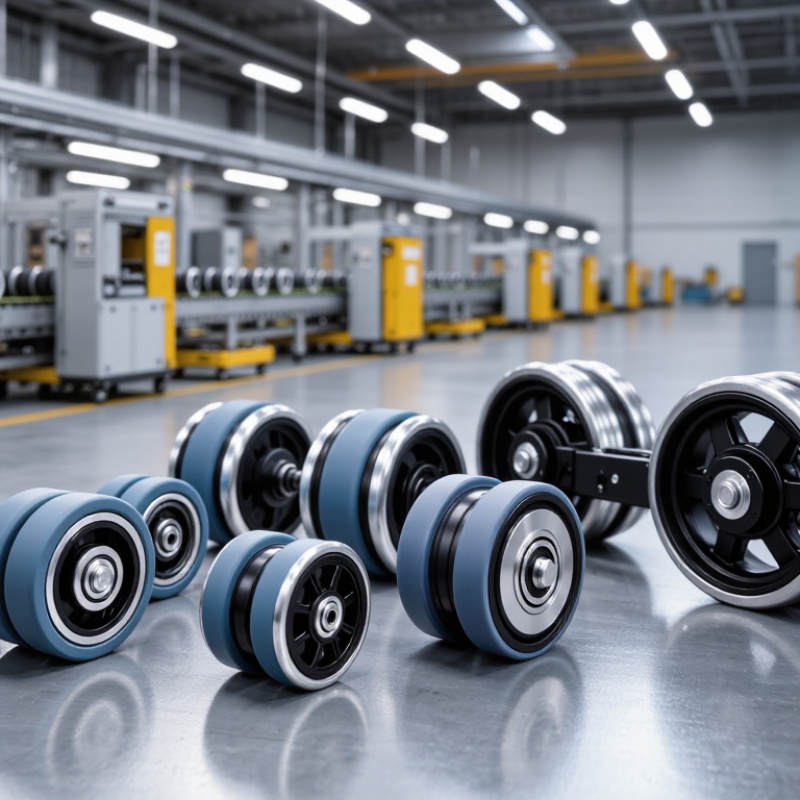
Omni directional wheels let a vehicle move sideways, diagonally, or rotate in place. Their rollers sit around the wheel’s circumference. Each roller turns on its own axis, reducing resistance during lateral movement. Standard wheels mainly push forward. Omni Wheels add another movement path.
A three-wheel platform usually places each wheel 120 degrees apart. Motor speed and direction create the desired movement vector. Mecanum systems use angled rollers, often near 45 degrees, to produce similar motion with four wheels. Control software must coordinate speed, torque, and wheel direction precisely. Small errors can cause drift.
The International Federation of Robotics reported 541,302 industrial robot installations worldwide in 2023. This record-level demand supports wider use of mobile platforms in factories and warehouses. However, wheel quality still decides real performance. Buyers should compare load capacity, roller hardness, bearing life, traction, noise, and floor compatibility. Smooth concrete may expose slip quickly.
A useful warning: omni movement is not frictionless. Dust, uneven joints, and excessive loads reduce accuracy. A wheel rated for 500 kilograms may perform poorly when its load is unevenly distributed. Manufacturer testing should include diagonal travel, emergency stops, repeated turning, and continuous operation. Technical documentation matters more than attractive speed claims. Good engineering is often less dramatic.
Leading Omni Directional Wheel Manufacturers to Consider in 2026
Leading Omni Directional Wheel Manufacturers to Consider in 2026
In 2026, leading omni directional wheel manufacturers will compete through precision, durability, and practical engineering support. Experienced manufacturers should explain wheel geometry, load ratings, and floor compatibility clearly. Look for production records, material traceability, and repeatable quality inspections. A reliable manufacturer should provide test data, not only attractive catalog images. Ask how each wheel performs under continuous turning, uneven loads, and frequent starts. Small design details matter. Tread hardness, bearing protection, and mounting accuracy can affect movement noticeably.
Tips: Request samples before approving large orders. Test them on your actual floor. Measure noise, vibration, turning resistance, and wear after several working shifts. Confirm replacement parts, documentation, and response times. A short technical call can reveal more than a polished brochure.
Manufacturers worth considering should offer customization without weakening basic reliability. They may adapt wheel diameter, load capacity, materials, or mounting patterns for mobile robots and industrial carts. However, customization needs disciplined engineering review. An oversized rating may look safe, yet it can increase rolling resistance. A softer tread may reduce noise, but wear faster. No manufacturer is perfect. I would compare failure reports, warranty terms, and inspection methods before choosing. Independent testing is useful when published claims seem unusually optimistic. Also, check whether the manufacturer can maintain consistent quality during larger production runs.
How to Compare Products, Customization, and Technical Support
2026 Best Omni Directional Wheel Manufacturers?
In 2026, choosing an omnidirectional wheel manufacturer requires more than comparing catalog prices. The real test is product fit, customization, and support after delivery. IFR’s World Robotics 2024 report recorded 541,302 industrial robots installed globally in 2023. That scale raises expectations for repeatable movement and dependable components. Ask for measured load capacity, roller hardness, contact patterns, turning resistance, and noise at working speed. Request test data on your actual floor surface. Small differences matter.
Customization should begin with your machine, not a standard quotation form. Define payload, wheel diameter, axle interface, material, encoder space, environment, and duty cycle before approval. Ask whether engineers provide CAD files, tolerance guidance, torque calculations, installation drawings, and pilot-batch testing. Deloitte’s 2023 Global Smart Manufacturing Survey found that 92% of executives expect smart manufacturing to drive competitiveness within three years. Technical support is therefore a purchasing criterion, not an optional service. Check response times, spare-part availability, troubleshooting procedures, and field-failure analysis.
Do not skip validation. An experienced supplier should explain traction versus maneuverability, and durability versus cost. Still, no brochure proves field reliability. Log vibration, flat spots, wheel wear, temperature, and response time during trials. I would also compare replacement intervals, not only the first purchase price. This is where evaluations become less tidy. A cheaper wheel can create higher maintenance costs later. A technically strong supplier may still need improvement in documentation or delivery accuracy. Ensure every promise appears in measurable acceptance criteria.
2026 Best Omni-Directional Wheel Manufacturers: Comparison Framework
A practical evaluation model for comparing omni-directional wheel suppliers by product capability, customization, and technical support.
The weighted score uses a 100-point procurement model: product performance accounts for 40%, customization 25%, technical support 20%, and documentation and compliance 15%. Buyers should verify load capacity, wheel diameter, roller material, mounting interface, operating environment, response time, test reports, and warranty terms with each supplier.
Common Applications and Selection Guidelines for Omni Directional Wheels
Common Applications and Selection Guidelines for Omni Directional Wheels
Omni directional wheels support lateral movement in compact spaces. They are used in AGVs, AMRs, conveyor transfers, hospital carts, and machine-tending platforms. Their value appears when a vehicle must rotate beside a rack, not make a wide turn. The International Federation of Robotics reported 541,302 industrial robots installed worldwide in 2023. This scale reflects growing demand for precise mobile automation, although robots do not automatically require omni wheels.
Selection should begin with real floor conditions. Measure total load, wheel spacing, travel speed, turning frequency, and ramp gradients. Check the smallest roller diameter, because small rollers can struggle with floor joints and debris. Polyurethane rollers may reduce noise, while harder materials can improve durability on smooth concrete. MHI’s 2024 Annual Industry Report found that 55% of surveyed supply-chain professionals currently use robotics and automation. That figure supports careful component choices, not rushed purchasing.
Test the wheel in a loaded prototype. Observe vibration near thresholds, sideways slip during acceleration, and heat after repeated cycles. Controller tuning matters as much as wheel quality. Some systems look precise on clean floors, then drift under uneven loads. That weakness is easy to miss. Ask manufacturers for rated load data, roller replacement guidance, duty-cycle limits, and test conditions. Certification documents, traceable materials, and responsive engineering support also improve reliability. The “best” manufacturer is therefore the one that matches the wheel design to your floor, payload, maintenance skills, and operating evidence.


